Hello!
First, let me say I’ve been writing this post for at least six months. Or: not writing it. Writing it in my head? Processing the idea of writing it? All of the above?
Let’s begin with a question–what role does urgency play in your own life? What feels like it needs to happen quickly, soon, ASAP, NOW? When you notice a problem, are you uncomfortable till it’s solved? When you think of something need to do, or even that you’d like to do, do you need to do it right away?
I was introduced to the concept of “a sense of urgency” in non-profit professional development session whose primary focus I’ve long forgotten during which colleagues passed out a handout listing “the characteristics of white supremacy culture.”
“White supremacy culture” was not a concept I was familiar with at the time. I think that when many white people hear the term “white supremacy,” they think of extreme racism, like the KKK. They don’t think “white supremacy culture” is something they are part of.
But. We are all a part of white supremacy culture. White supremacy culture, with its friends capitalism and patriarchy, got us to where we are right now in American, which I am beginning to think of as the era of the authoritarian apocalypse.
I am hardly an expert on white supremacy culture, but you know who is?
Tema Okun
https://www.whitesupremacyculture.info/about.html
(You could spend months reading this website. It’s awesome.)
Here’s an excerpt from her writing on urgency:
A constant sense of urgency:
makes it difficult to take time to be inclusive, encourage democratic and/or thoughtful decision-making, to think and act long-term, and/or to consider consequences of whatever action we take;
sacrifices and erases the potential of other modes of knowing and wisdom that require more time (embodied, intuitive, spiritual);
encourages shame, guilt, and self-righteousness to manipulate decision-making;
reinforces the idea that we are ruled by time, deadlines, and needing to do things in a “timely” way often based on arbitrary schedules that have little to do with the actual realities of how long things take, particularly when those “things” are relationships with others;
makes it harder for us to distinguish what is really urgent from what feels urgent; after a while everything takes on the same sense of urgency, leading to mental, physical, intellectual, and spiritual burnout and exhaustion
I’ve bolded that last one.
If you’ve been feeling worn out, perhaps urgency plays a role. It’s no big leap to say that our phones and technology reinforce our sense that everything is wrong and urgent. In the moments after waking up this morning, I opened my computer and email, and was exposed to the following within 10 minutes:
- a list of recent (alleged) bear attacks on humans (thanks mom)
- a variety of new articles, including ones about head injuries in the NLF; misogyny in Germany (and the rest of the world); dying, thousands-years-old trees in Great Britain; tarriffs; war; the lingering impacts of 9/11; the erosion of voting rights; and a story about rogue AI
- two op-eds on how said AI is destroying education
- three emails about work deadlines
- two appointment reminders
- a bill for $2500 for something I thought I had paid off in full
Now! Of course, I didn’t have to open my computer, or my email. But this is a lot to be exposed to, especially when the whole reason I got up at 5 AM is to court creativity. The barrage is constant, and we all feel it.
My wonderful therapist reminds me often, when I’m feeling overwhelmed, to ask the question: what wants my attention? This can be hard question to navigate, when everything wants our attention. But if I slow down (and close the computer/put down the phone), often something will rise to the surface, and it’s usually not solving a problem, though there are many to solve. It’s: writing this meandering essay/post. Writing a line of a poem, not knowing where I am going with it. Flipping through an old magazine and cutting out some images or phrases that catch my eye. Walking the dog with my neighbor. Chatting, in a rare luminous moment, with my teenager.
One reason I have put off finishing and posting this is because I don’t really have one big, conclusive point. I will say that as I wrote the last paragraph, I kept hearing the final words of Mary Oliver’s “The Summer Day:”
Tell me, what is it you plan to do
with your one wild and precious life?
(On a side note, I’ve been pondering in a poem, what would I get if I got a tattoo? And honestly it should really be those lines; I have written about them here and elsewhere and quoted them in my classrooms so many times…)
So, I think I wanted to write this just to invite you, one of my few and special readers, to slow down. Slowing down is fundamental to the idea that pleasure is resistance, a kind of activism: eg adrienne maree brown’s Pleasure Activism (which is another draft I have in the works!)
I stated this post (in February!) with these words:
Let’s begin with a question–what role does urgency play in your own life? What feels like it needs to happen quickly, soon, ASAP, NOW? When you notice a problem, are you uncomfortable till it’s solved? When you think of something need to do, or even that you’d like to do, do you need to do it right away?
So. let me end asking, how are you living in this urgent world? We don’t have to wake up and solve everything. We can wake up and live (I typed “love;” that, too). What wants your attention today, and what does your attention want? Your “one, precious life:” what do you want to include? Do that!
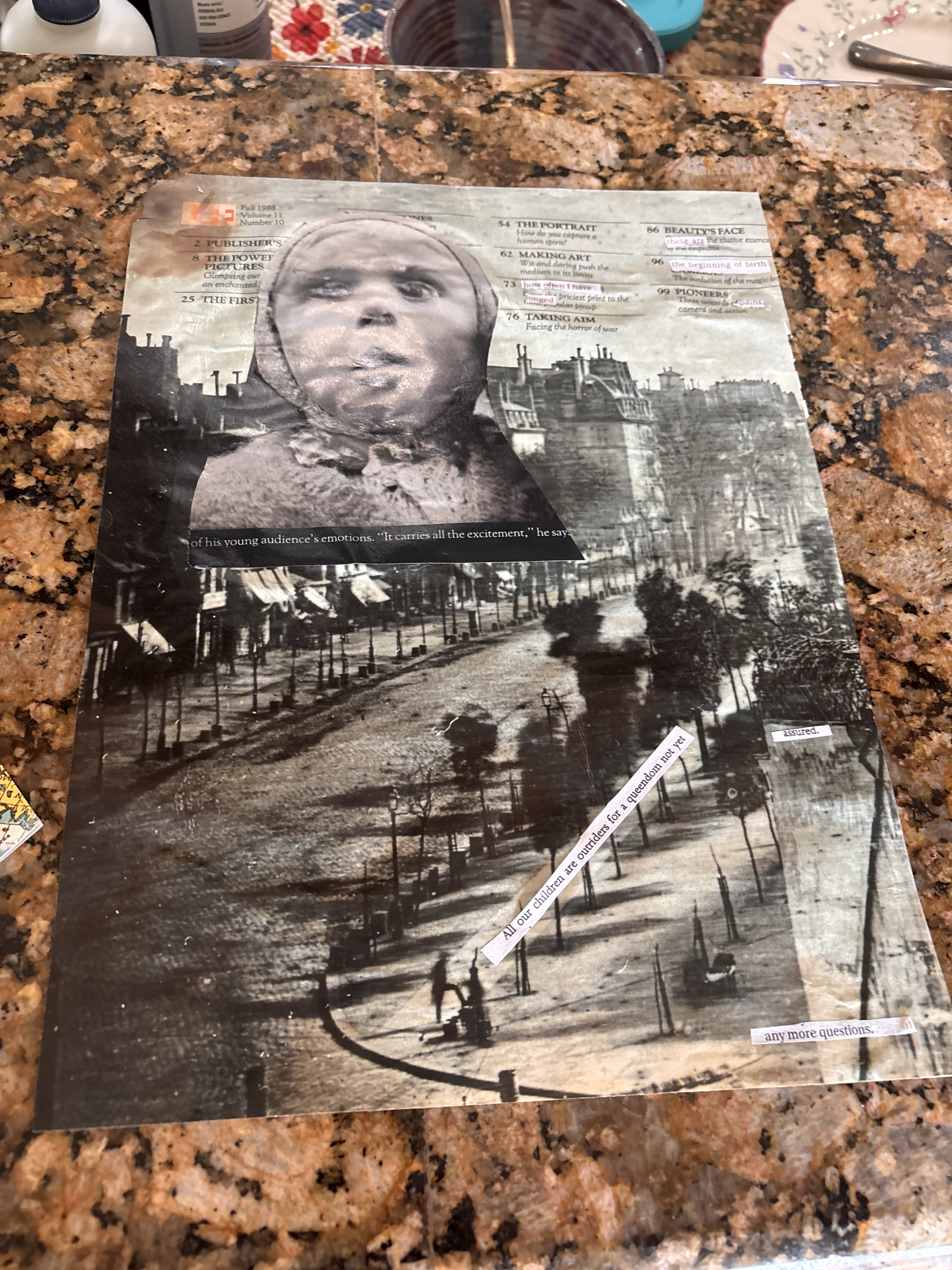
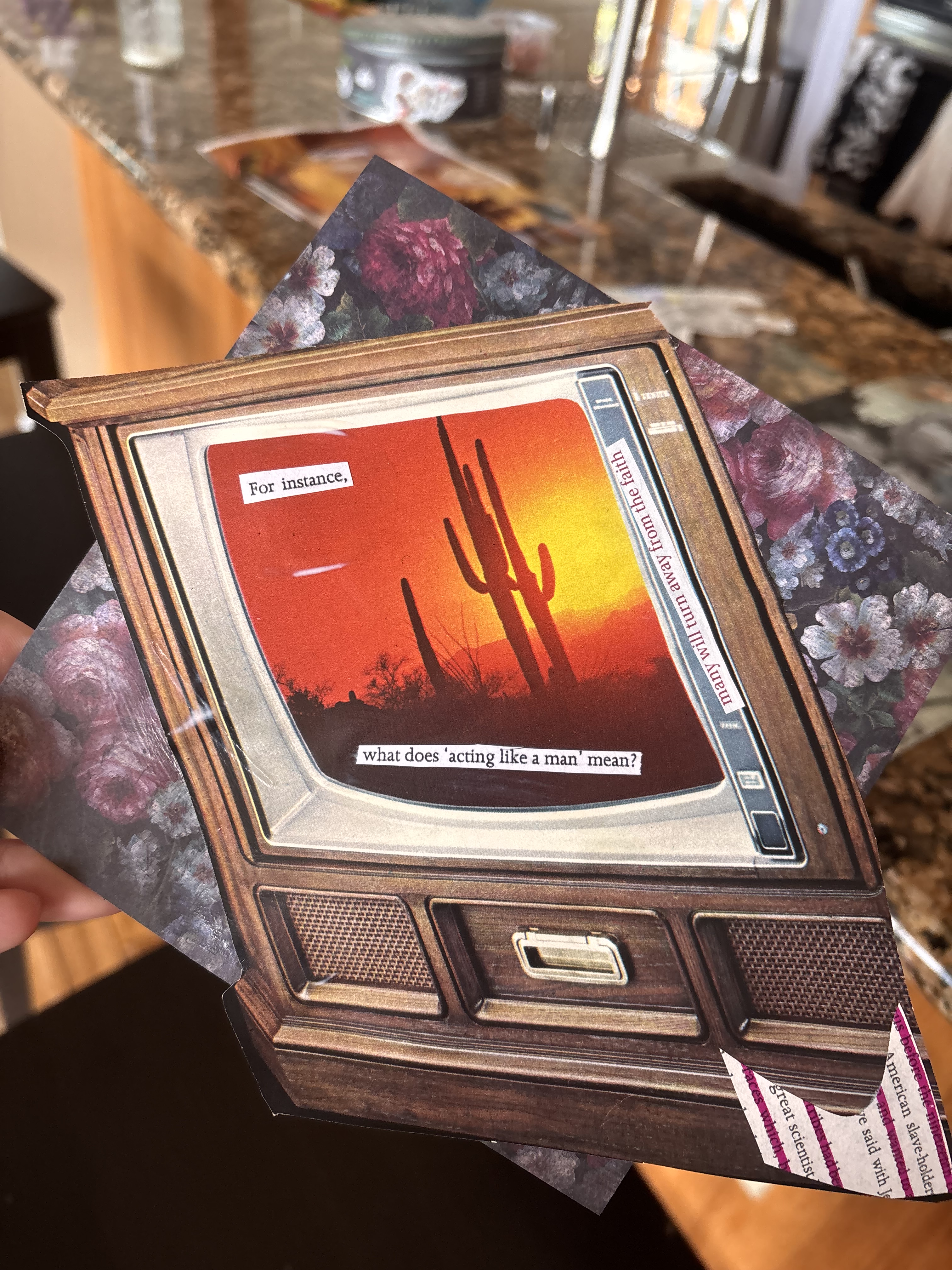
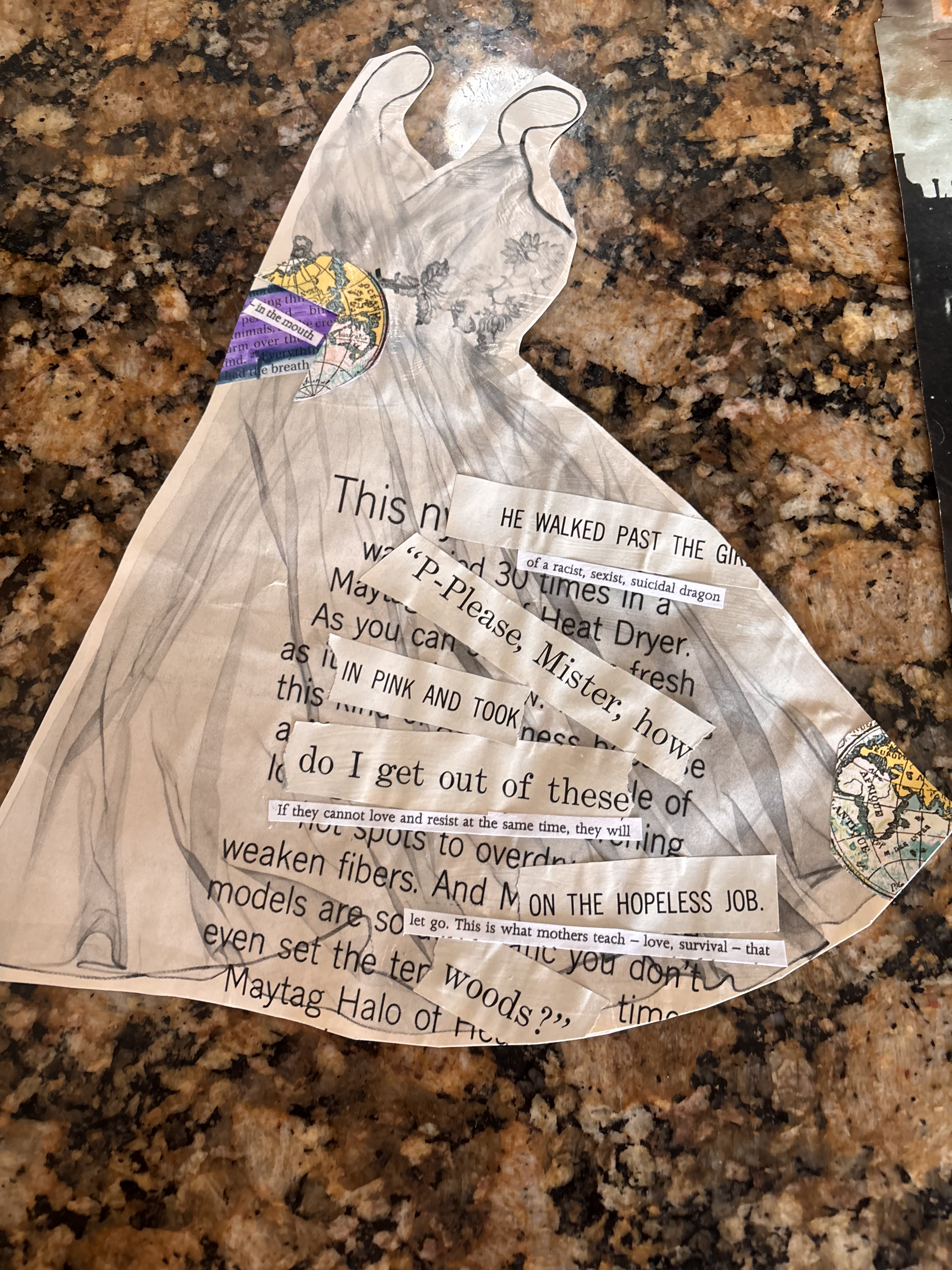
I’ll leave you with a few recent collages.


Leave a Reply